
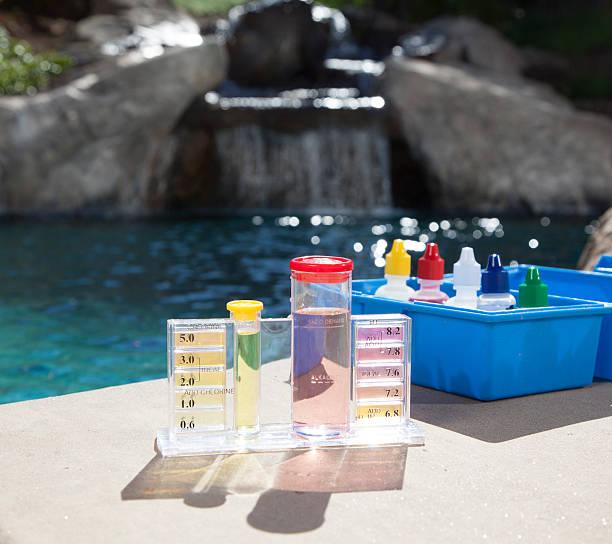
Professional residential water testing in Queens provides the laboratory-grade precision that do-it-yourself kits cannot match, ensuring accurate results for complex contaminants and plumbing issues. Many families begin with a simple idea: buy a tap water test kit, follow the instructions, and get quick answers about whether the water is safe. It sounds affordable, easy, and convenient. For basic curiosity, a do-it-yourself kit may feel like a reasonable first step. But when the concern involves lead, copper, bacteria, PFAS, potability, plumbing corrosion, or unexplained changes in taste and odor, many families quickly realize that a simple kit does not answer everything, making expert verification essential for safeguarding household health.
Tap water concerns are rarely just about one number on a strip. A family may want to know whether a contaminant is coming from the public water supply, the home’s service line, the water heater, a specific faucet, or older interior plumbing. They may also need to know whether the issue affects the entire home or only one fixture. These questions require more than a quick color-change result. They require proper sample planning, suitable laboratory methods, and clear interpretation.
That is why more homeowners are looking beyond DIY kits and choosing professional testing through services such as Tap Water Testing. Professional testing gives families a stronger way to understand what is actually happening at the tap, especially when the results may influence health decisions, filtration choices, property decisions, or peace of mind.
DIY Kits Can Be Helpful, But They Have Limits
DIY tap water test kits are popular because they are easy to find and usually inexpensive. Many are sold online or in hardware stores, and they often claim to test for multiple substances in one box. Some kits use strips that change color. Others include small vials, drops, or mail-in components. For a homeowner who is simply curious about hardness, chlorine, or general water characteristics, these tools may provide a basic screening idea.
The problem is that families often expect more certainty than these kits can provide. A color strip may show a broad range instead of an exact result. Lighting, timing, water temperature, user handling, and interpretation can all affect the reading. Two people may look at the same strip and read slightly different results. That may be acceptable for simple curiosity, but it is not enough when a family is trying to understand lead exposure, bacterial contamination, or complex chemical concerns.
DIY kits may also test for a long list of items but not with the level of sensitivity needed for meaningful decisions. Some contaminants matter at very low levels. Others require specific laboratory methods to measure properly. The U.S. Environmental Protection Agency explains that public water systems must follow standards under the Safe Drinking Water Act, but household-level concerns can still depend on plumbing, fixtures, and sampling location. The EPA’s information on drinking water regulations helps show why water quality is more complex than a simple one-size-fits-all kit.
Lead and Copper Testing Needs Careful Sampling
Lead and copper are two major reasons families move beyond DIY testing. These metals are often connected to plumbing materials, fixtures, solder, and corrosion inside the home. The water leaving a treatment plant may meet required standards, but the water coming from a household faucet can still be affected by the building’s plumbing. This is especially important in older homes, apartments, and neighborhoods with legacy infrastructure.
Lead testing is not only about whether lead is present. The sample timing and collection method matter. For example, a first-draw sample may show what water picked up while sitting in pipes, while a flushed sample may provide different information about the water after it has been running. If samples are not collected correctly, the results may be misleading. A DIY kit may not explain these differences clearly enough for families to understand what the result actually represents.
Copper can also be influenced by corrosion and water chemistry. Blue-green staining, metallic taste, or plumbing changes may lead families to wonder whether copper is present at elevated levels. A professional testing plan can consider pH, corrosion indicators, and plumbing conditions alongside copper results, giving a fuller picture than a basic kit.
Families concerned about older plumbing can review Why Test Tap Water to understand why testing at the tap can matter even when public water is already monitored at the system level.
Bacteria Testing Requires Reliable Handling
Bacteria testing is another area where DIY kits may not be enough. Some bacteria tests require sterile containers, correct collection steps, temperature control, and timely delivery to a laboratory. If a sample is contaminated during collection or sits too long before analysis, the result may not be reliable. This is especially important for private wells, homes with unusual odors, or situations where water safety is a serious concern.
A family may want to know whether water is potable, meaning suitable for drinking, or whether certain microbial indicators are present. These questions are too important to answer casually. Professional testing can help ensure that the sample is collected in the right container, delivered within the proper holding time, and analyzed using suitable methods.
The Centers for Disease Control and Prevention advises private well owners to test well water regularly and recommends using a state-certified laboratory for testing. Its guidance on testing well water is a helpful reminder that proper analysis matters, especially when bacteria and drinking-water safety are involved.
PFAS and Emerging Contaminants Are Not Simple DIY Issues
PFAS concerns have become more common as families hear about “forever chemicals” in news reports, environmental studies, and public water discussions. PFAS testing is not the same as checking chlorine or hardness. These compounds are usually measured at very low levels, and testing often requires specialized laboratory methods, careful sample containers, and strict handling procedures to reduce contamination risk.
Many DIY kits are not designed to provide the analytical depth needed for PFAS. Some may not test for PFAS at all, while others may provide limited screening. For families who are genuinely concerned about PFAS, a professional laboratory test is usually a more appropriate path.
The EPA provides public information about PFAS in drinking water, including regulatory and health-related background. For homeowners, the key point is simple: PFAS is a technical testing category, and families should avoid relying on vague or incomplete screening when they want real clarity.
DIY Kits May Not Show Where the Problem Starts
One of the biggest limitations of DIY testing is that it often gives a result without explaining the source. A family may test water from the kitchen sink and see something unusual. But does that mean the issue is in the public supply, the service line, the whole home, the kitchen faucet, the filter, the water heater, or a section of plumbing? A simple kit usually cannot answer that.
Professional testing can be planned around locations. Samples may be collected from more than one fixture, such as the kitchen tap, bathroom tap, basement sink, or water heater-related line. In some situations, comparing samples helps determine whether the concern is isolated or system-wide. This is especially useful when one faucet has a metallic taste, one bathroom shows staining, or only hot water has an odor.
Understanding the pattern matters. A problem limited to one fixture may have a different explanation than a problem found throughout the home. Professional testing helps families move from “something seems wrong” to “this is where the issue appears to be showing up.” Homeowners who are seeing taste, odor, staining, or cloudy-water concerns can learn more through Common Water Problems.
Professional Testing Offers Better Interpretation
A test result is only useful if the family understands it. DIY kits may show a number, color, or basic pass/fail message, but they often leave homeowners asking what to do next. Is the number high? Is it normal? Is it above a guideline? Does it matter for drinking, cooking, bathing, or appliances? Should the family retest? Should they test another faucet?
Professional testing gives families more support after the sample is analyzed. A good testing process explains what was tested, what was detected, what was not detected, and which results may need more attention. This interpretation is especially important when multiple results interact. For example, pH can influence corrosion, hardness can affect scaling, and plumbing materials can influence lead or copper levels.
This is one reason many families choose professional Tap Water Testing Services instead of relying only on store-bought kits. They are not just buying a test; they are getting a more complete process.
Certified Laboratory Analysis Builds More Confidence
When families are making decisions about drinking water, confidence matters. A certified laboratory follows controlled methods, quality procedures, and reporting standards that are different from most home screening kits. This does not mean every homeowner always needs the most advanced test available, but it does mean that serious concerns deserve serious analysis.
Certified lab results can also be easier to document. If a family is testing after moving into a home, discussing a property concern, reviewing a rental issue, or comparing results over time, a formal laboratory report carries more value than a photo of a test strip. It gives the homeowner a clearer record of the sample, date, method, and result.
Professional testing can also help avoid unnecessary purchases. Without reliable results, families may spend money on filters or treatment systems that do not match the actual issue. A pitcher filter, faucet filter, reverse osmosis system, carbon system, softener, or whole-house filter may each address different concerns. Testing first helps guide smarter choices.
Families Want Clarity, Not Just Quick Answers
DIY kits are attractive because they promise speed. But families usually need clarity more than speed. A fast answer that leaves more questions can create more stress. If a test strip suggests a possible issue but does not confirm it clearly, the family may still need professional testing afterward. In that case, the DIY kit becomes only the first step, not the final answer.
Professional testing takes a more thoughtful approach. It considers the concern, the home, the plumbing, the sampling location, and the type of analysis needed. That structure helps families avoid overreacting to unclear results or ignoring issues that deserve closer attention.
Families can also use professional testing to create a baseline. Even if results do not show major concerns, the report gives the homeowner a reference point for the future. If the water changes later, they can compare new results to the earlier report.
Final Thoughts
DIY tap water test kits can be useful for simple screening, but they are not always enough when families need dependable answers. Lead, copper, bacteria, PFAS, corrosion, potability, and plumbing-related concerns require more than a quick color strip or basic kit. They require the right sample plan, reliable laboratory methods, and clear interpretation.
For families who want to understand whether a concern belongs to one faucet, the whole plumbing system, or a broader water-quality issue, professional testing provides a stronger path. It turns uncertainty into structured information and helps homeowners make decisions based on results rather than guesswork.
To begin with a more reliable testing process, families can explore Tap Water Testing or reach out through the Contact page to discuss which testing scope may fit their home and concerns.