
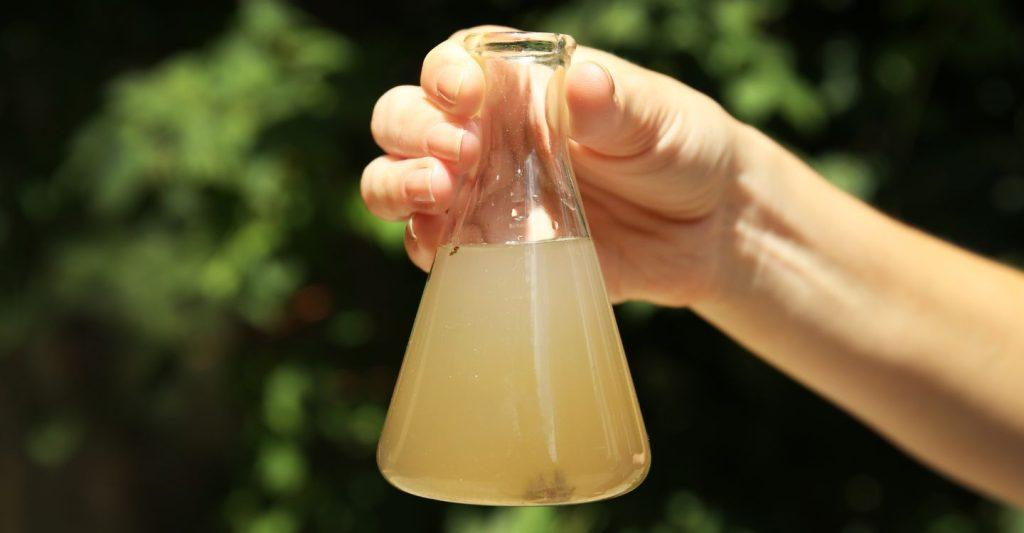
In an era where DIY kits for almost everything are available at the click of a button, it is tempting to view tap water testing through the same lens. You might see a home test kit at a hardware store or online retailer and think, “This is simple. I will just dip a strip, check the color, and verify if my water is safe.” These quick screens often miss critical contaminants and lack the analytical rigor required for reliable safety data. Choosing a NYC accredited water testing laboratory delivers precise results through standardized sampling and certified instrumentation that accurately measure harmful substances so you can address issues before they impact your health.
However, when it comes to the safety of your drinking water, the distinction between a quick color-changing strip and a certified laboratory analysis is the difference between a rough guess and a scientific certainty. For families, homeowners, and anyone responsible for their home’s infrastructure, certified testing is not an unnecessary expense—it is an essential layer of protection.
The Limitations of “At-Home” Tests
At-home test kits are designed for convenience, but they often lack the precision required for meaningful health decisions. They typically use basic colorimetric chemistry, which can be highly subjective and prone to interference.
- Sensitivity Gaps: Many common contaminants, especially heavy metals like lead or arsenic, are harmful at extremely low levels. Simple test strips often lack the sensitivity to detect these contaminants at the threshold where they become a health concern.
- False Results: Because at-home kits are often sensitive to temperature, light, and the presence of other common minerals, they are notorious for producing false negatives (missing a problem) or false positives (worrying you unnecessarily).
- Lack of Certification: A kit you buy online is not held to the same standards as a professional facility. It doesn’t provide the legal, scientific backing that a third-party laboratory offers.
When you use tap water testing services backed by a certified laboratory, you are paying for accuracy, calibration, and rigorous quality control.
What “Certified” Actually Means
A certified laboratory is not just a place with beakers and microscopes. To earn and maintain certification, these facilities must undergo regular, rigorous auditing by state or federal agencies.
This process ensures:
- Precision Instruments: Labs use highly advanced technology, such as Inductively Coupled Plasma Mass Spectrometry (ICP-MS), which can detect contaminants at the parts-per-billion or even parts-per-trillion level.
- Methodological Rigor: Every test follows a strictly documented, EPA-approved methodology. This means the result is reproducible and reliable.
- Chain of Custody: Professional labs maintain a strict “chain of custody” for your samples, ensuring the integrity of the water from the moment it is collected until the moment it is analyzed.
Why Professional Data is Actionable
The primary reason to use a professional laboratory is that you need actionable data. If you are trying to solve common water problems, you cannot afford to base your purchase of expensive filtration equipment on a vague “maybe.”
If a lab report indicates a specific level of copper or a specific pH imbalance, you can match that data to the right treatment system. You avoid the “trial and error” approach that leads to buying filters that don’t solve your actual problem. Understanding why test tap water through a certified lens means you are investing your money in a solution that works for your specific home.
The Value of Regional Expertise
Water quality is not a static issue. It is influenced by local geology, industrial history, and municipal infrastructure. A local water testing partner often knows what to look for in your specific area. They understand the “stories” that local water tells—such as the tendency for high mineral content in a specific county or the likelihood of aging lead service lines in older city districts.
This local insight, combined with laboratory-grade precision, gives you a comprehensive picture that an off-the-shelf strip simply cannot provide.
Beyond the Results: The Expert’s Perspective
Perhaps the most underrated aspect of using a professional laboratory service is the interpretation. A list of numbers on a page can be confusing. Does “0.05 mg/L” mean you should be concerned? Is that number normal for your area?
Professional services help you interpret the numbers. They can tell you if a result is a cause for immediate alarm or if it is a manageable issue. They bridge the gap between “technical data” and “household safety,” allowing you to take informed steps to protect your family.
Final Thoughts: Invest in Certainty
Your home’s water is the foundation of your family’s health, from the first glass of water in the morning to the water used for nightly baths. Entrusting that health to a potentially inaccurate home kit is a gamble you don’t need to take.
By choosing certified laboratory testing, you are choosing a path of clarity. You are choosing to see the truth about your plumbing, the chemical makeup of your water, and the necessary steps to secure your environment.
If you are ready to get the real story behind your tap, reach out and contact us. Let our team guide you through the process of getting the professional answers you deserve.
When you look at the water quality data for your area, does it mention any specific concerns, or are you starting your search for answers from scratch?