
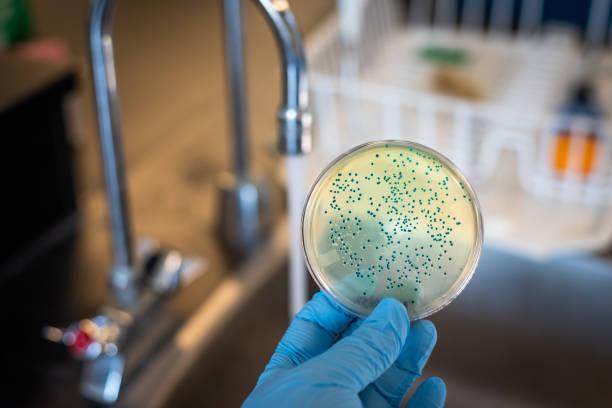
Certified bacteria water testing in Manhattan identifies harmful microbial contaminants that routine chemical panels frequently overlook. When homeowners think about tap water testing, lead, copper, iron, and other plumbing-related concerns usually receive the most attention. It is easy to associate these metals with aging infrastructure, pipe corrosion, unsightly staining, and a noticeable metallic taste. Addressing these physical signs matters greatly, but focusing exclusively on metals leaves critical safety gaps. A comprehensive water evaluation must also include biological screening, because microscopic threats can expose hidden sanitation issues or contamination pathways that a metals-only report simply cannot detect.
Bacteria testing is especially important in older plumbing systems, underused spaces, vacant properties, buildings with unusual occupancy patterns, private wells, and homes where water quality has changed without a clear explanation. Water may look clear and still carry bacterial indicators. A faucet may pass a metals test and still show signs of microbial activity. This is why bacteria testing remains an essential part of meaningful water analysis.
For homeowners, landlords, property managers, and families who want more complete information, Tap Water Testing can help build a testing approach that looks beyond one category of concern and considers the full water-use situation.
Why Bacteria Testing Matters
Bacteria testing helps answer a different set of questions than metals testing. Metals testing focuses on substances that may come from plumbing materials, corrosion, source water, or distribution conditions. Bacteria testing looks for microbial indicators that may suggest contamination, stagnation, poor turnover, cross-connection concerns, or conditions inside a water system that deserve closer review.
This difference matters because water-quality problems do not all come from the same source. A home can have low lead and copper results but still have bacterial indicators. A building can have no major discoloration but still show microbial concerns in a rarely used tap. A property may have clear water at the kitchen sink but different results in a basement bathroom, utility sink, or underused unit.
Bacteria testing gives property owners another layer of information. It helps identify whether the water is only being evaluated for plumbing metals or whether the testing program is also considering potability and microbial conditions. For families or building owners who want real clarity, that broader view is important.
The Tap Water Testing Services page explains how testing can be organized around different concerns instead of relying on one limited panel.
Coliform Bacteria as an Indicator
Total coliform is one of the most common bacteria tests used in drinking water analysis. Coliform bacteria are often used as indicators because their presence can suggest that water may have been exposed to environmental contamination or that the system has conditions allowing bacteria to enter or persist. A total coliform result does not always mean the water contains harmful bacteria, but it does mean the sample deserves attention.
For private wells, total coliform testing is especially important because the property owner is usually responsible for monitoring water quality. Wells can be affected by surface water intrusion, nearby land use, damaged caps, flooding, septic systems, or changes in groundwater conditions. Even if the water looks clean, bacteria testing may reveal something that appearance alone cannot.
For public-water homes, coliform concerns may be less common at the system level because public utilities monitor water quality. However, bacteria testing may still be relevant at the tap in specific situations. Older building plumbing, low-use fixtures, vacant units, plumbing repairs, filter housings, and unusual odors can all create reasons to test.
The Centers for Disease Control and Prevention recommends testing private well water regularly and using a state-certified laboratory. Its guidance on testing well water is useful for understanding why bacterial indicators are part of responsible water monitoring.
Why E. coli Testing Is Different
E. coli testing is more specific than total coliform testing. While total coliform can indicate that environmental bacteria are present, E. coli is more directly associated with fecal contamination. This makes it a more serious result when detected in drinking water. For homeowners and property managers, an E. coli finding should not be treated casually.
E. coli testing is particularly important for private wells, properties near septic systems, homes affected by flooding, and sites where water contamination is suspected. It can also be relevant after major plumbing disruptions or when a property has been vacant and then returned to use.
A key point is that E. coli cannot be reliably identified by taste, smell, or appearance. Water may look normal and still test positive for bacterial indicators. That is why laboratory analysis matters. Testing provides information that the senses cannot.
The U.S. Environmental Protection Agency explains that E. coli is used as an indicator organism for fecal contamination in drinking water. The EPA’s information on national primary drinking water regulations provides helpful background on why microbial indicators are taken seriously in water-quality programs.
HPC and What It Can Reveal
HPC, or heterotrophic plate count, is another bacteria-related test that can provide useful information in certain tap water programs. HPC does not identify one specific pathogen. Instead, it estimates the number of heterotrophic bacteria that can grow under the test conditions. In practical terms, HPC can help show whether there may be elevated general bacterial activity in the water system.
HPC can be useful when evaluating underused spaces, building plumbing, filters, storage conditions, or areas where water has been sitting for long periods. High HPC results may point toward stagnation, biofilm activity, low disinfectant residual, or other conditions that deserve closer review. It is not the same as a coliform or E. coli test, but it can add context.
This is one reason bacteria testing should not be reduced to a single question. A serious program may include total coliform, E. coli, and HPC depending on the property and concern. Together, these tests can provide a better microbial picture than one limited screen.
For homeowners noticing odor, unusual taste, cloudy water, or water from rarely used fixtures, the Common Water Problems page can help connect everyday signs with possible testing needs.
Older Plumbing Systems Need a Broader View
Older plumbing systems can create complex water-quality conditions. People often focus on lead, copper, and iron in older buildings, and that makes sense. But old plumbing can also include dead-end lines, unused branches, low-flow areas, aging fixtures, storage tanks, filters, and sections where water does not move regularly. These conditions can make bacteria testing more relevant.
In older homes, certain taps may be used daily while others may sit unused for days or weeks. In multifamily buildings, some units may be occupied while others remain vacant. In commercial or mixed-use properties, restrooms, utility sinks, or break rooms may have inconsistent water use. These patterns can affect water turnover.
Testing only for metals may miss these microbial conditions. A metals panel can tell a property owner whether certain plumbing-related metals are present, but it cannot reveal total coliform, E. coli, or HPC concerns. A broader testing program gives a more complete view of the water at the tap.
Homeowners and building owners can review Why Test Tap Water to understand why property age, plumbing history, and water-use patterns may influence testing decisions.
Underused Spaces Can Create Water Quality Questions
Underused spaces are one of the strongest reasons to include bacteria testing. Water quality can change when water sits in pipes for long periods. Stagnant water may lose disinfectant residual, interact with plumbing materials, collect sediment, or support bacterial growth in certain conditions. This is especially relevant in guest bathrooms, basement sinks, seasonal homes, vacant apartments, office buildings, schools, and spaces that were unused during renovations.
A faucet that has not been used regularly may not represent the same water quality as a frequently used kitchen tap. If a homeowner tests only the main kitchen faucet, they may miss conditions in less-used areas. For buildings with many fixtures, sample planning matters.
Bacteria testing can help identify whether underused fixtures are showing microbial indicators. HPC may be useful in this context because it can reveal general bacterial activity. Total coliform and E. coli testing may also be important depending on the property and water source.
The American Water Works Association provides educational resources on water quality and distribution systems, including how water quality can be affected before it reaches the final tap. Their information on water quality helps explain why water movement, system conditions, and distribution context matter.
Private Wells Require Special Attention
Private wells deserve specific attention because they are not monitored the same way public water systems are. In many cases, the homeowner is responsible for testing and maintaining awareness of water quality. Bacteria testing is one of the most important parts of that responsibility.
Well water can be affected by groundwater conditions, nearby septic systems, agricultural activity, flooding, damaged well components, surface runoff, or changes after storms. Total coliform and E. coli testing can help identify whether the well water has bacterial indicators that deserve attention. Depending on the location, a well testing program may also include nitrates, arsenic, pH, hardness, metals, and other local contaminants.
For families using well water, relying only on a metals panel would be incomplete. Bacteria testing should be part of routine evaluation because microbial concerns can appear even when the water looks normal.
Proper Sampling Is Critical for Bacteria Testing
Bacteria testing is only useful when the sample is collected properly. The container must usually be sterile, and the person collecting the sample must avoid touching the inside of the bottle or cap. The faucet may need to be handled according to specific instructions, and the sample often needs to reach the laboratory within a short holding time.
This is one reason professional testing is valuable. A poorly collected bacteria sample can produce misleading results. It may show contamination caused by bad sampling technique, or it may fail to represent the water accurately because it was delayed or mishandled.
Certified laboratory analysis provides better control. It helps ensure that the right bottle, timing, preservation, and reporting methods are used. That is especially important when the result may influence whether a family feels comfortable drinking the water.
Bacteria Testing Supports Potability Questions
When people ask whether water is potable, they are usually asking whether it is suitable for drinking. Potability testing often includes bacteria indicators because microbial contamination can be one of the most immediate concerns in drinking water. A potability evaluation may also include nitrate, nitrite, pH, turbidity, metals, or other parameters depending on the water source and local standards.
A metals-only panel cannot answer a potability question. It may help identify lead, copper, iron, or arsenic, but it does not show whether bacterial indicators are present. For families, buyers, landlords, and property managers, this distinction is important. A complete answer requires the right mix of tests.
The FAQ page can help homeowners better understand common tap water testing questions, including what testing may involve and why different concerns require different panels.
Final Thoughts
Bacteria testing still belongs in every serious tap water testing program because metals alone do not tell the full story. Lead, copper, iron, and other metals are important, but total coliform, E. coli, and HPC can reveal microbial conditions that a metals-only panel would miss.
This matters in older plumbing systems, private wells, underused spaces, vacant properties, and buildings with unusual water-use patterns. It also matters for families who want clearer answers about potability and daily drinking water quality.
A strong testing program should be built around the property, the water source, the plumbing history, and the way water is actually used. Homeowners and property managers who want a more complete analysis can begin with Tap Water Testing or reach out through the Contact page to discuss a testing scope that includes both chemical and bacteria-related concerns.